
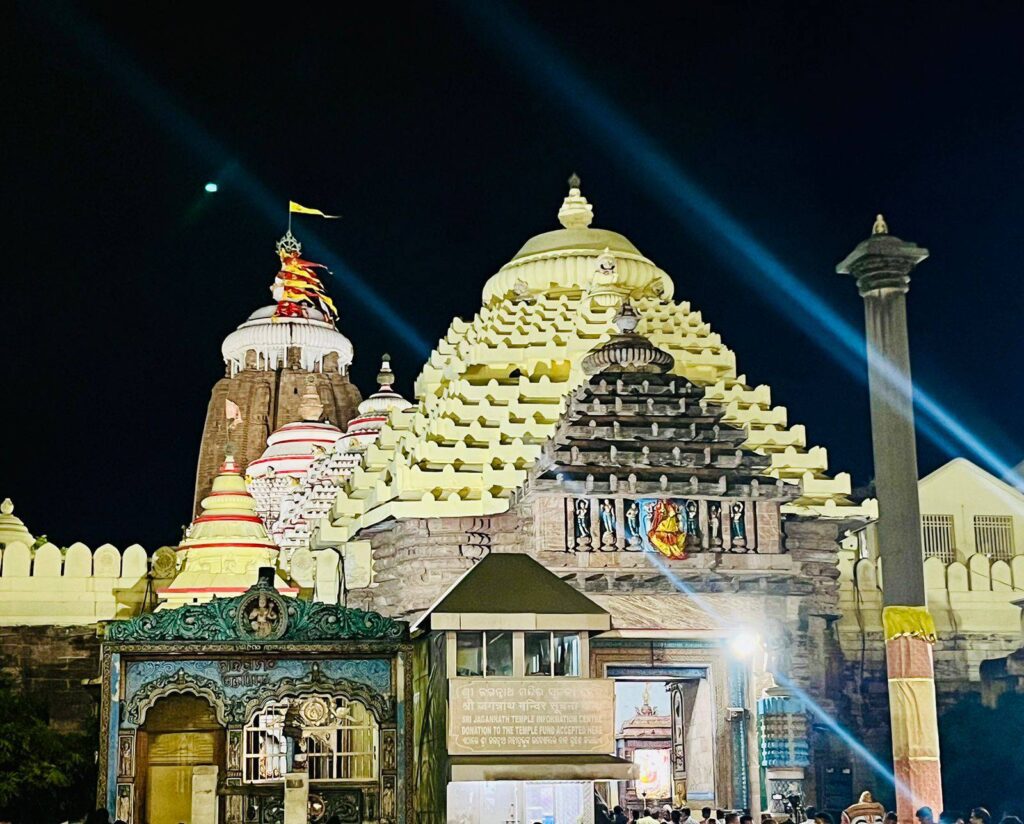
The History of Jagannath Puri, Odisha
The history of Jagannath Puri dates back to ancient times, and the origins of the Jagannath Temple can be traced back to the 12th century, during the reign of Anantavarman Chodaganga Deva, a ruler of the Eastern Ganga dynasty. The temple was built on the site of an earlier temple, which had been destroyed by Muslim invaders. The current temple complex covers an area of over 400,000 square feet and is surrounded by a high wall, with four gates facing the four cardinal directions.
The Jagannath Temple is renowned for its annual Rath Yatra, or Chariot Festival, which is held in the month of June or July. During this festival, the idols of Lord Jagannath, Lord Balabhadra, and Goddess Subhadra are taken out of the temple and placed on three large wooden chariots, which are pulled by thousands of devotees through the streets of Puri. The festival attracts millions of pilgrims from all over India and abroad, making it one of the largest religious gatherings in the world. Every year, lakhs of devotees from all over India and the world come to Puri to participate in the annual Ratha Yatra festival, which is a major highlight of the city’s calendar.
The Temple has faced numerous invasions and attacks throughout its history. The temple was destroyed several times by Muslim invaders and was rebuilt each time with the help of the local rulers and devotees. The British also had a significant impact on the temple, with the construction of a railway line that cut through the temple complex, and the introduction of new laws and regulations that restricted the activities of the temple priests.
Despite these challenges, the Jagannath Temple remains an important pilgrimage site for Hindus and a symbol of the rich cultural heritage of India. The temple is renowned for its unique architecture, which combines elements of the Kalinga and Dravidian styles, and for its intricate carvings and sculptures. The temple complex also includes numerous smaller temples and shrines, as well as a kitchen that serves free meals to thousands of devotees every day.
Conclusion: the history of Jagannath Puri is a testament to the enduring power of faith and devotion. Despite the challenges faced by the Jagannath Temple over the centuries, it remains a symbol of the rich cultural heritage of India, and a source of inspiration for millions of devotees around the world. Whether you are a Hindu or simply a lover of history and culture, a visit to Jagannath Puri is sure to leave a lasting impression on your mind and soul.